managing complexity

what is complexity?
Besdies the daily life nuance associated with the word, complexity also has a specific meaning, or rather various different specific meanings according to which field of science it pertains to. For example in information sciences complexity refers to the number of properties transmitted that can be discerned by an observer. In computer programming complexity refers to the number of interactions between the encoded elements. More technical definitions are used in mathematics and algorithmic theories.
Complexity Sciences has become a new field of study within itself. A map of the evolution of complexity is included in Wikipedia.

Some human enterprises or relationships are seen as complicated, others are accepted as complex. Most evolved systems are inherently complex as they evolve in a network of other interacting systems that are also evolving. Hence there will inevitably be many influences on any particular system, some of which are ripples from afar that may combine as an unexpected “perfect wave” of influence.
wicked problems
The notion of a “wicked problem” was developed by Rittel who published a paper 1973 Rittel and Webber Wicked Problems.pdf in 1973. We refer to situations that have contradictory and changing requirements, as if often the case when there are groups of interacting people with different desires and world views.
The following is a paraphrasing of Rittel’s original set of characteristics:
-
 each problem is unique, but can be described in many ways
 -
no solution is perfect or inherently “right”, and each solution is unique
-
solutions, if found, arise by trial and error
-
each wicked problem is a symptom of one or more other problems
A non-technical and well formulated description of wicked problems can be found in “Tackling Wicked Problems” published by the Australian Public Service Commission.
system traps
In her Chapter on Systems Traps (Thinking in Systems, 2008)
Donella Meadows considers systems from the perspective of the actions we take to try and fix things, but which lead to contrary consequences. Thus she has detected patterns in how people in our present western culture relate inappropriately to the complex systems, some of which are our own creations, and that we are embedded in.
The names of the traps that she discusses are evocative in themselves:
-
 Policy Resistance – Fixes that Fail
 -
Tragedy of the Commons
-
Drift to Low Performance or Escalation
-
The Rich get Richer – Competitive Exclusion
-
Shifting the Burden to Intervenor – Addiction
-
Rule Beating
-
Seeking the Wrong Goal
cybernetics
The general public notion about cybernetics is rather biased by the usage of the root “cyber” in cyberspace, cyberpunk, etc. As noted by the online etymological dictionary, this prefix could be grafted on to any word to make it new, cool, or strange -- because no one knew what it meant.
However, the word has rather more benign roots. The word is derived from the ancient Greek word “kybernetes” meaning “steersman. ” In the 1940’s, Norbert Wiener was working on control systems for electronic communication, and thus realized the need for a new field of science, that is the study of communication and control in “animals and machines.” He pioneered the notion of feedback, and applied this and other notions to engineering, computer science, biology and society.
Thus cybernetics is inherently a trans-disciplinary approach concerned with the study of systems. The work has moved forward in ways that are relevant to each of the disciplines that it is relevant to, and thus has branched into many different approaches. One of the more relevant approaches has been the distinction between first order cybernetics (about the systems we observe) and second order systems (about the observing systems, themselves). Some of the players and relationships are shown on Ison’s figure where he depicted the development of systems approaches.
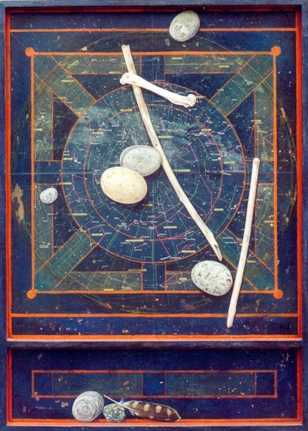


Artwork on this page by Jane Wolsak



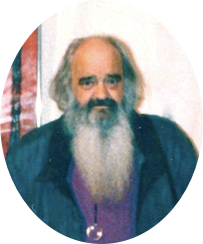
This is a long video of Stafford Beer talking about the history and meaning of Cybernetics. It is worth watching not only for the content but to see the person. I don’t know the date, but believe it was recorded in the 1990’s.
concepts through parables
Allenna Leonard writes:
“Many concept from systems and cybernetics are familiar to us through old saying, fables, nursery rhymes and everyday use as well as newer metaphors and examples”.
She has compiled a number of these, including ideas such as “the cow that jumped over the moon” and “more than one way to skin a cat” and “the canary in the mind” in a Cybernetics Beastiary”
complicated or complex
There is highly relevant nuance that we usually associate with the difference between complicated and complex.
Complicated usually just means that we know we can work through it, we understand the parts, there are just many of them and we will have to spend some time and effort to organize or clarify them. For example, we would call a 1000 piece jig saw puzzle complicated, but not complex.
When we speak about something being complex, it usually means that we are aware that something we wish to have an influence on is also influenced by many other factors that we either cannot change or that we are not really aware of. Of course, if we say that something is “hidden from us”, we must have a sense that there is something. Perhaps we sense an influence we cannot name in language, or perhaps we simply sense that all that we do know is not adequate for explaining what is happening.
Dave Snowden, in developing the cynefin framework distinguishes complicated as something that can be investigated or analyzed, and complex as something for which the causal factors can only be distinguished in retrospect.
complex adaptive systems
Systems that consist of a dynamic network of interactions are known as complex adaptive systems. All naturally evolved systems act as complex adaptive systems, though the changes in the system may be buffered through various homeostatic (regulatory, balancing) processes for long periods of time.
Some of the key characteristics of complex adaptive systems are:
-
the system has many parts
-
the relationship among the parts is non-trivial
-
the system retains a memory
-
the relationships are in a network that results in circular influences
-
the parts change (adapt) in either or both structure and behaviour
-
the starting point (parts and relationships) makes a difference